The first time I saw it, I was walking to the train station. Red letters on a wall, neat and precise, like someone had used a stencil. REMIGRATION. I stood there staring at it. Why here? In this quiet neighbourhood I’ve always thought of as peaceful.
I thought maybe it was random at first. Teenage vandalism, something meaningless. But then my daughter told me she’d seen it too, at the bus station. Same stencilled letters, same red paint. Then I saw it again three days ago at a T-junction. You could see where the city had scrubbed some of it away, but whoever was doing this kept coming back, writing it in different places. This wasn’t just one angry person with a spray can. This was deliberate.
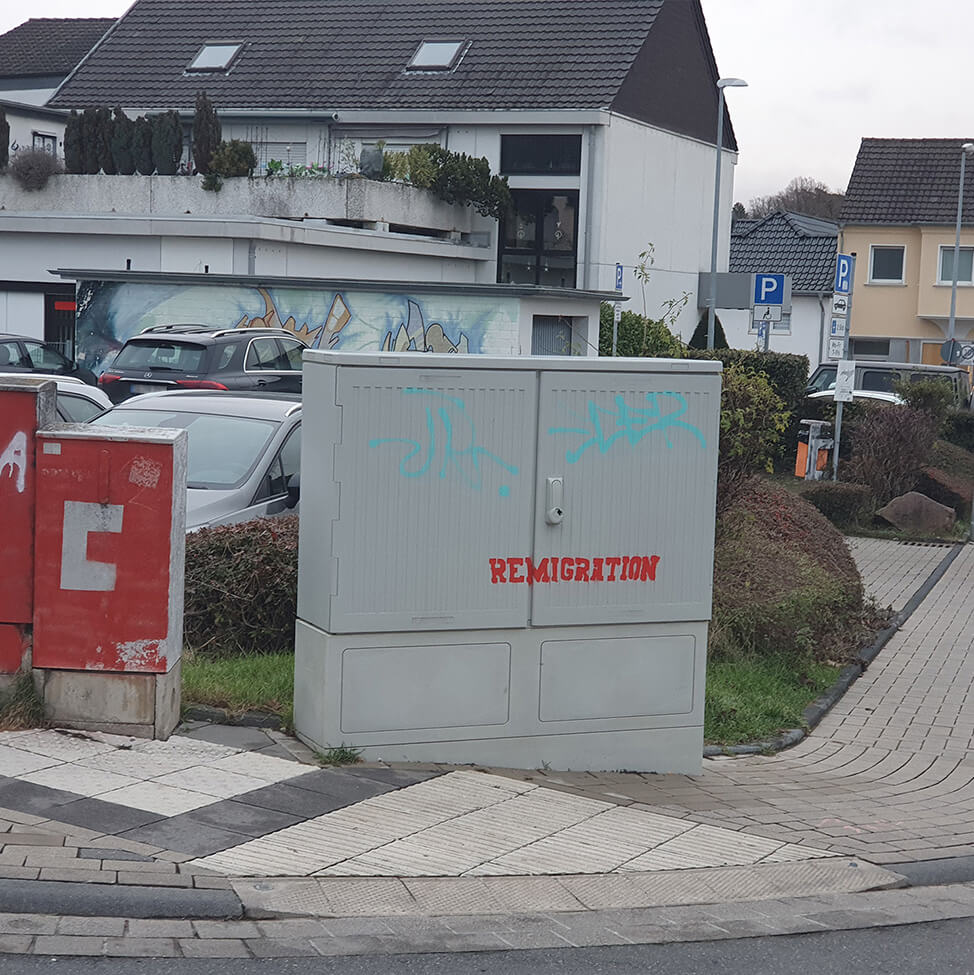
I live on the outskirts of Bonn, in a community that’s always seemed peaceful to me. People here are nice and polite. They keep to themselves, but I never thought it meant anything. Now I’m not sure what I’ve been seeing all this time, or what I’ve been missing.
The word itself, remigration, I’d heard it floating around in the news. But seeing it spraypainted in the neighbourhood I live is different. It stops being abstract politics and becomes something that sits in your chest.
What does remigration actually mean? People like my family could be told to leave, even if we’re here legally, even if we work and pay taxes and speak the language. The idea is that if you’re not “assimilated enough,” if you don’t fit someone’s definition of belonging, you should go back to wherever they think you came from. It doesn’t matter that we’ve built lives here. Under remigration policy, someone else gets to decide we don’t belong.
This isn’t coming from nowhere. I’ve been watching the AfD gain ground, hearing them talk more openly about remigration. In January last year, their leader Alice Weidel said the word openly at a party congress, not hiding it anymore, making it clear this is what they want. And now it’s here, in the neighbourhood where I live with my family.
I don’t think the word on these walls is just graffiti. It’s part of something bigger that’s been building for months, something that’s moved from closed-door meetings to public rallies to campaign materials that show up in people’s mailboxes. I remember reading and writing about those fake deportation tickets.
They were designed to look like airline tickets. Deportation tickets, with “ILLEGAL IMMIGRANT” printed where a passenger’s name should be. The destination said “Safe country of origin.” The departure gate was “Gate AfD.” The date was February 23, election day. At the bottom: “Only remigration can save Germany” and “It’s nice at home too.” People found them in their mailboxes, especially in neighbourhoods with migrant families. I remember reading about it and thinking, wow, they’re actually doing this… openly.
I think about those flyers when I see the graffiti now. Things that seemed impossible months ago have become normal. Remigration has gone from political rhetoric to something spraypainted in neighbourhoods, something people see on their way to work. The place I thought I knew feels different now.
This morning, my daughter asked me something that made my stomach drop. She said seeing “remigration” everywhere makes her feel uncomfortable, like something is going to happen. And then she asked if maybe we should get cameras around the house.
Cameras? My daughter is asking about cameras. She works here, put so much effort into learning the language, trying to build a life here. And now she’s asking about cameras because of words spraypainted on walls. I never thought we’d have this conversation. Not here, not in this neighbourhood that’s always felt safe.
But here we are. The AfD keeps growing, their rhetoric keeps getting bolder, and more people seem comfortable with it. Remigration is being discussed like it’s reasonable policy, not a threat to families like mine.
I don’t know who is spraypainting these walls. I don’t know if it’s one person or many, if it’s coordinated or spontaneous, if it’s young people who’ve been radicalized online or older people who’ve been waiting for permission to say what they’ve always thought. What I know is that someone in my neighbourhood, maybe someone I’ve passed at the park, believes this message needs to be seen. Believes it strongly enough to come back after the city scrubs it away. Believes it needs to be everywhere.
What does this mean? I genuinely don’t know. I don’t know if this is the beginning of something worse. I don’t know if my daughter’s instinct is right, if we should be worried, if cameras would even help or if they’d just be a Band-Aid on something much larger.
What I do know is that I don’t feel the same about this neighbourhood anymore. That word, painted in red, has changed how I see things. I keep wondering what I haven’t been noticing, what I’ve been missing. “Peaceful” doesn’t feel like the right word anymore, or maybe it never was.
I know that my daughter is scared about what comes next. I don’t have a good answer for her, no way to reassure her that we’ll be okay here. Because I honestly don’t know.
I walked past that wall again this morning. The red letters are still there. I didn’t stop this time, just kept walking, but that word stayed with me. My daughter asked about cameras, but what are cameras going to do? They won’t change the fact that someone in this neighbourhood wants us gone. I keep thinking about that. Not whether we’ll be safe, but whether this will ever actually feel like home.